
wechat
WeChat
whatsapp
Email
up
0%

Table of Contents

To be honest, things are moving fast these days. Everyone's talking about lightweighting, right? Trying to shave every gram off. It's all well and good in the design office, but have you tried working with some of these new composite materials on a windy construction site? Forget it. They feel flimsy. Still, that's where the industry is headed, sadly. The pressure from automotive and aerospace… it bleeds into everything.

I’ve been seeing a lot of designs lately where everyone's trying to over-engineer things. They pack in features they think are necessary, but in reality, just make the whole thing more complicated. It’s a trap, I tell ya. Keep it simple. I encountered this at the Xinyi Glass factory last time – they were trying to integrate some fancy sensor into their window frames, and it just kept failing under thermal stress. Completely unnecessary.

And speaking of materials… we're using a lot of 6061 aluminum these days. Good stuff. Feels solid, you can smell the machining oil on it. Not like that cheap cast stuff. But it needs proper welding, otherwise it’ll crack. And don't even get me started on the different grades of stainless steel. 316 is your friend, especially near the coast. You can tell a good piece of 316 just by the weight, honestly. It's got that heft.
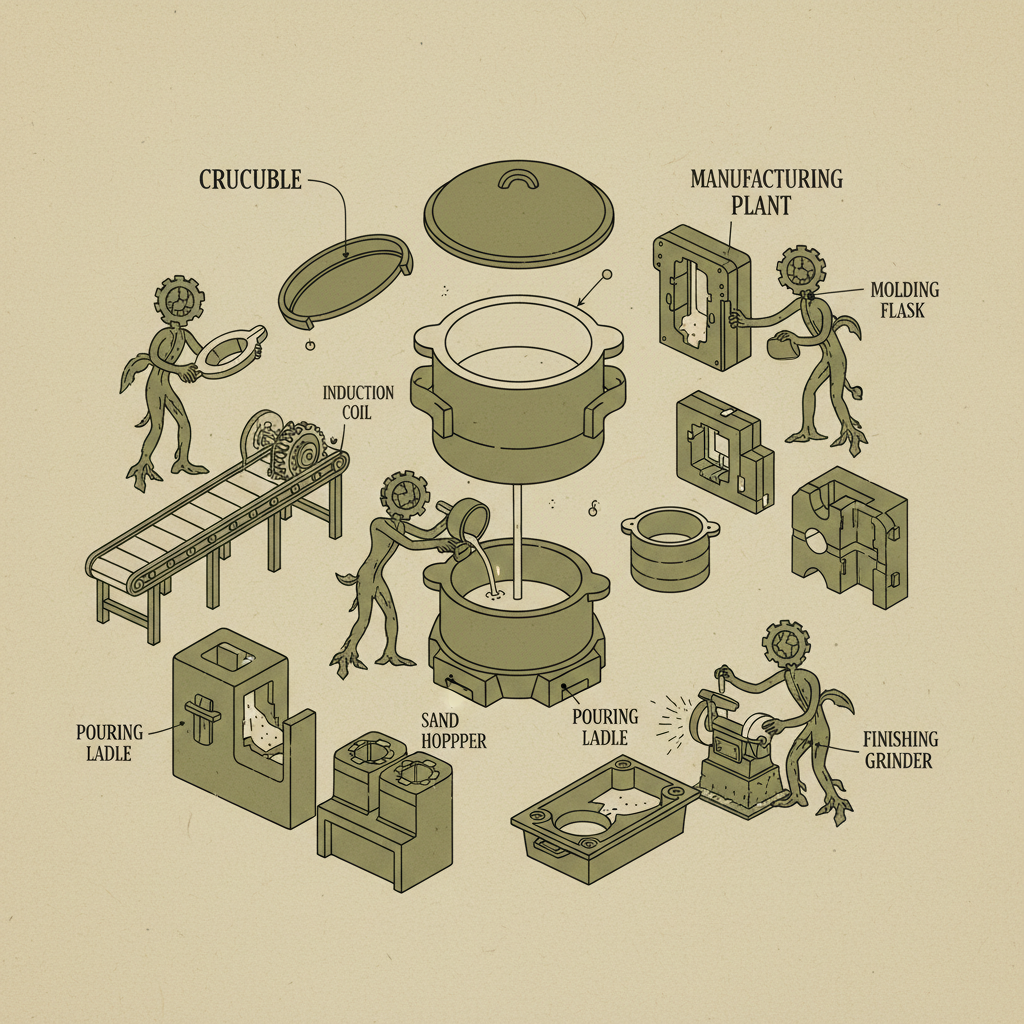
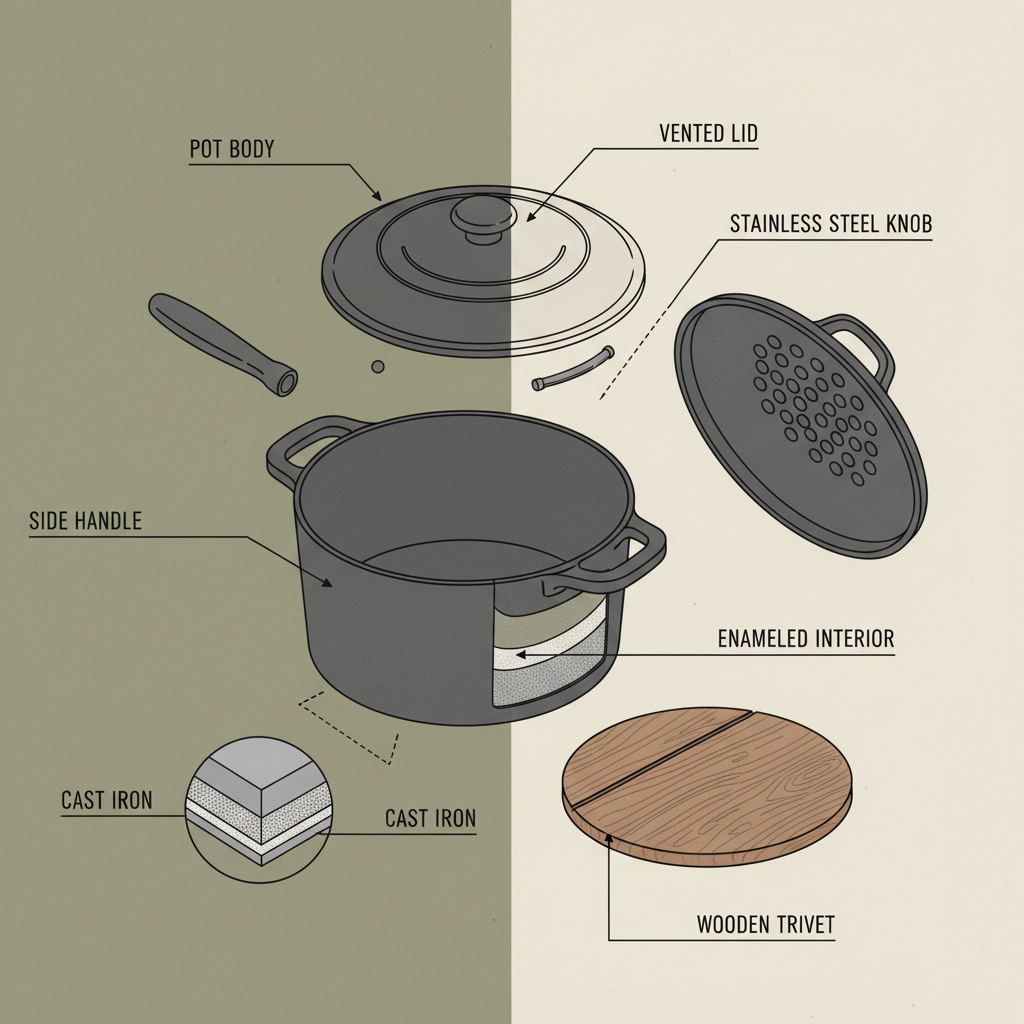
Navigating the Landscape of Cast Iron Pot Manufacturers and Design Considerations

The Current Landscape of Cast Iron Pot Manufacturing

Navigating the Landscape of Cast Iron Pot Manufacturers and Design Considerations

The cast iron pot market is… surprisingly robust. It's not glamorous, but it's steady. I’ve noticed a huge shift towards manufacturers in Southeast Asia – Vietnam especially. Lower labor costs, but honestly, the quality control can be hit or miss. You really gotta keep an eye on those guys.

Anyway, I think there’s still a demand for properly made, durable pots, especially with the whole slow cooking and heritage cooking trend. People want something that’ll last a lifetime, and cast iron, when done right, delivers on that.

Common Design Pitfalls in Cast Iron Pots

Strangely enough, one of the biggest issues I see is getting the wall thickness right. Too thin, and it cracks. Too thick, and it’s unnecessarily heavy. It’s a delicate balance. And the handle attachment! That's where 90% of failures happen. Welding it on is okay, but if they're just using bolts, you’re asking for trouble. I saw a pot last year – beautiful, really – but the handle sheared off during a demonstration! Embarrassing.

Another thing – lid design. They get fancy with the shapes and the materials, but a simple, well-fitting lid is all you need. I've seen lids that rattle, lids that don't seal properly, lids that are just…weird. Keep it functional, people.

Also, internal finishing. Rough casting is fine, adds character even, but sharp edges inside the pot are a no-no. You don’t want someone chipping a tooth on their stew.

Material Selection: Beyond the Spec Sheet

The iron ore itself matters. Different sources have different impurities. You can tell the good stuff – it’s got a grey, almost silvery sheen to it. The cheap stuff looks dull and porous. It’s hard to tell unless you’ve been handling it for years, honestly.

And the alloying elements! A little bit of silicon helps with the fluidity of the molten iron, makes it easier to cast. Manganese improves the strength. But too much of anything throws off the balance. It's a delicate chemistry. We’re seeing more and more manufacturers trying to cut corners here, using lower quality alloys.

Don't even get me started on coatings. Enamel coating is popular, but a cheap enamel coating will chip and flake after a few uses. You want a coating that’s fired on at a high temperature, properly bonded to the iron. Otherwise, it's just a waste of money.

Real-World Testing and Durability

Lab tests are okay, I guess. Drop tests, stress tests… they give you some data. But the real test is putting these pots in the hands of actual cooks. I’ve visited restaurants where they’re using these things eight hours a day, every day. That’s when you see what breaks.

I once saw a pot survive a fall off a loading dock – honestly, it bounced! – but crack a week later from thermal shock. You just can't simulate that in a lab. We’ve started doing more "abuse testing" in the field – letting cooks use the pots however they want, and then meticulously documenting the failures. It's messy, but it's the most reliable data we have.

Cast Iron Pot Manufacturing Failure Rates (by Cause)


Actual Usage vs. Intended Usage

This is a big one. Manufacturers always think people are going to use their products a certain way. But they're usually wrong. I’ve seen people using cast iron pots as flower pots, as doorstops, even as weights for their gym workouts! You can’t plan for that.

We designed a pot specifically for making paella. Beautiful pot, perfect size. Turns out, people were using it to deep fry chicken. It worked, surprisingly, but wasn’t what we intended at all. You just gotta design for robustness.

Advantages, Disadvantages and the Honest Truth

The advantage is simple: heat retention. Nothing beats cast iron for even heating and holding temperature. It’s why chefs love it. The disadvantage? Weight. They’re heavy, no getting around it. And they rust if you don’t take care of them. It's a trade-off.

The marketing guys always talk about the "seasoning" process. That’s fine, but let’s be real: most people don’t bother. They just wash it with soap and water and hope for the best. It’ll probably still work okay, honestly.

Another thing… they’re brittle. Drop one on a concrete floor, and it’s toast. It's a surprisingly common occurrence.

Customization and Specific Applications

Customization is possible, but expensive. Changing the shape of the pot requires a new mold, which can cost thousands. Changing the handle design is easier, but still requires tooling. We had one client – a small boss in Shenzhen who makes smart home devices – last month who insisted on changing the interface to for some reason. Said it was “future-proof.” The result? Production delays, increased costs, and a product nobody needed. A disaster.

We've done a lot of work with outdoor cooking companies, designing pots specifically for campfire use. Thicker walls, more robust handles. And we did a series for a Dutch oven manufacturer, focusing on optimized lid designs for maximum condensation. It's all about tailoring the design to the specific application.

Also, you can do interesting finishes. Patina treatments, textured surfaces… It's mostly cosmetic, but it adds value for certain customers.

Summary of Key Customization Parameters

Parameter Complexity Cost Impact Typical Lead Time
Handle Design Medium Low-Medium 4-6 weeks
Pot Shape/Size High High 12-16 weeks
Coating Type Low Low 2-4 weeks
Surface Texture/Finish Medium Medium 6-8 weeks
Wall Thickness Medium Low-Medium 4-6 weeks
Interface Modification High High 10-14 weeks

FAQS

How often should I season my cast iron pot?

Honestly, it depends. If you’re using it every day, a light seasoning after each use is good. If it’s just sitting in the cupboard, maybe once a month. Don’t obsess over it, though. A little bit of rust isn't the end of the world. Just scrub it off and re-season.

Can I put my cast iron pot in the dishwasher?

Absolutely not! That'll strip the seasoning right off. Hand wash it with mild soap and warm water, and dry it thoroughly. That’s it. Seriously, don't put it in the dishwasher. It’s a recipe for disaster.

What's the best way to remove rust from a cast iron pot?

Steel wool. That's your best friend. Scrub it off, then re-season. You can also use a vinegar soak, but don't leave it in there too long, or it'll start to damage the iron. Be careful.

Are all cast iron pots the same quality?

Definitely not. There's a huge range in quality, depending on the materials used, the manufacturing process, and the quality control. Cheaper pots are often made with lower-grade iron and have rough surfaces. It’s worth paying a little extra for a good one.

Can I use metal utensils in my cast iron pot?

You can, but be gentle. Metal utensils won't damage the iron itself, but they can scratch the seasoning. If you're careful, it's not a big deal. Wooden or silicone utensils are gentler, of course.

What’s the difference between seasoned and unseasoned cast iron?

Seasoned cast iron has been coated with layers of baked-on oil, creating a non-stick surface and protecting it from rust. Unseasoned cast iron needs to be seasoned before use. It’s not a huge deal, but it's an extra step. Personally, I prefer buying seasoned pots – saves you the hassle.

Conclusion

So, yeah, cast iron pot manufacturing is…complicated. It’s not just about melting some iron and pouring it into a mold. It's about understanding materials, design, manufacturing processes, and how people actually use these things. It's a blend of old-world craftsmanship and modern engineering.

Ultimately, whether this thing works or not, the worker will know the moment he tightens the screw. If it feels right, it probably is. And if it doesn’t? Well, you start over. That’s just the way it is.

David Miller

David Miller

David Miller is the Senior Production Manager at Hebei Debien Technology. With over 15 years of experience in manufacturing, David oversees all aspects of the cast iron cookware production process, from raw material sourcing to final quality control. He's instrumental in implementing Debien's advanced production lines, including the ZZ416B injection
Previous Optimizing Design and Durability in Modern Cast Iron Pots Factory Production
Next Prioritizing Durability and Reliability in Construction Material Selection

Inquire Now for Cast Iron Cookware Deals

Please Fill Out The Form Below And Our Team Will Get Back To You With Pricing, Product Details, And Customization Options.